Solar Power Plants for Industry: A Key to Energy Efficiency and Cost Savings
Factories across India have one thing in common: the electricity bill always feels like it’s running a separate business of its own. Anyone who has managed a production line knows the quiet tension that comes with each tariff revision, each power cut, each diesel generator refill. Energy is the lifeblood of industry, yet it’s also one of the biggest sources of uncertainty.
This is the reason why the top industrial executives are no longer questioning the viability of solar energy; instead, they are deciding the time and means of its integration. They reassess their unproductive land parcels, and the cost of the future over time with a totally new perspective. Solar is not a subject of trendy words and presentations to the management anymore. It is at the level where actual factories, warehouses, and plants employ it to carry out their real operations.
Introduction to Solar Power Plants for Industry
Industrial electricity demand is very different from residential or commercial loads. Machines run for long hours. Processes can’t stop. Reliability matters as much as cost. In this environment, industrial solar energy systems offer something simple yet powerful: predictable energy at a stable cost for years.
Today, industries use solar in several ways:
Captive plants built on their own land
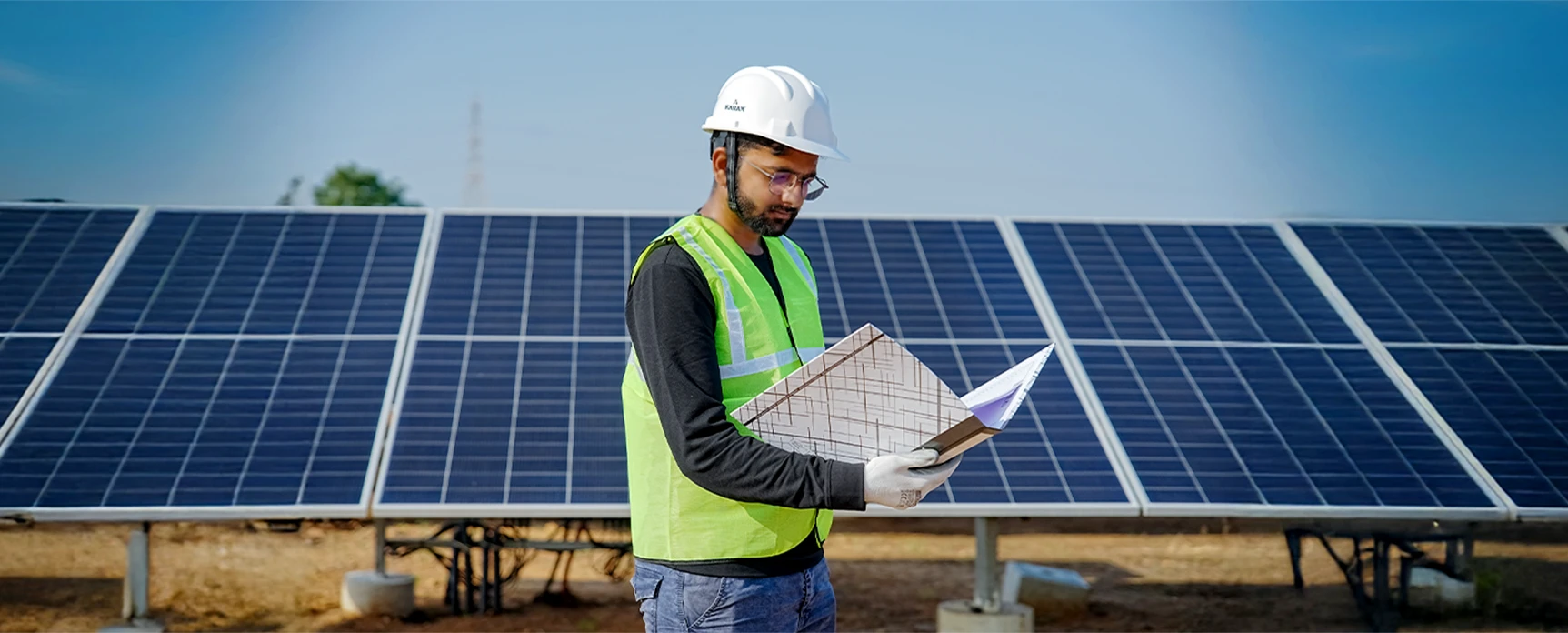
Ground-mounted solar panel installation for industry that directly feeds the plant
Open-access models that supply solar power through the grid
Hybrid systems with battery storage for reliability
The transition isn’t about switching everything to solar overnight. It’s about building a more stable energy strategy for the next 20 years.
How Solar Power Plants Contribute to Energy Efficiency
Solar doesn’t just replace grid power. It reshapes how industries think about energy efficiency optimization and industrial energy management.
Solar output follows a predictable curve. Machines adapt better. Planning becomes easier. Many factories optimize their daytime load around solar availability, which reduces stress on DG sets and lowers heat-related losses on equipment.
A well-designed system also improves operational efficiency through:
Better load balancing
Lower reactive power penalties
Improved power factor
Reduced voltage fluctuations
When solar is paired with photovoltaic systems built for industrial-scale operations, the overall energy strategy becomes steadier and more resilient.
Cost Savings with Solar Power Plants in Industrial Applications
Every industrial leader wants the same clarity: what exactly will solar save?
The answer depends on the tariff category, demand charges, and the project model, but across India, industries commonly see:
30-60 percent reduction in daytime electricity costs
Minimal long-term maintenance expenses
An asset with a 25-year performance life
Lower exposure to tariff hikes
This is why cost-effective solar energy is not a theoretical selling point. It’s a practical financial decision. Solar gives industries the rare gift of knowing their energy cost curve well into the future.
Industrial users also benefit from avoided diesel consumption. One hour of DG-run operations can cost four to six times more than solar. Even partial offsetting of DG use results in significant annual savings.
Solar Power Plant for Industry: Carbon Footprint Reduction
Most sustainability statements look good in a report, but industries today are under real pressure from customers, regulators, and global supply chains. Solar is a straightforward way to achieve a quantifiable reduction of carbon emissions that does not entail operational complexities.
By way of illustration, every megawatt of solar capacity installed results in the avoidance of around 1,200-1,500 tons of CO2 emissions annually. For manufacturers who are heavily reliant on exports, this is a significant factor. Carbon-aware buyers are leading the way in giving preference to suppliers with sustainable energy solutions.
One of the very few renewable energy solutions that can be integrated into the current industrial processes without the need for significant changes in the behavior is solar.
Scalability of Solar Power Plants for Different Industries
Whether it’s a textile mill with high daytime loads or a pharmaceutical facility with cleanroom requirements, solar adapts to the environment instead of expecting the environment to adapt to it.
A solar power plant for industry can scale in multiple ways:
Ground-mounted plants for high-load factories
Hybrid setups with batteries for reliability
Wheeling-based plants for multi-location companies
Scalability ensures industries don’t have to decide everything upfront. Solar can grow with them.
Financial Incentives and Government Policies Supporting Industrial Solar Projects
Policy isn’t the easiest topic for anyone, but it plays a major role in why solar is spreading across India’s industrial belts.
Key enablers include:
Accelerated depreciation benefits for eligible businesses
Waivers on transmission and wheeling charges in certain states
Banking provisions for surplus energy in selected regions
Open-access policies enabling power purchase from remote solar plants
These incentives make solar more accessible, especially when planning long-term CAPEX or exploring commercial solar solutions through OPEX models.
The Technological Advancements in Industrial Solar Power Plants
The last decade has changed what industrial solar looks like. Modules generate more energy per square meter. Inverters offer granular monitoring. SCADA systems streamline data. And when industries add storage, it reduces the dependency on unpredictable grid patterns.
Key solar technology innovations shaping industrial use include:
High-efficiency bifacial panels
Smart inverters with grid-support functions
Advanced string-level monitoring
Improved plant analytics for performance tracking
Battery systems for reducing peak-hour dependence
Along with this, solar plant maintenance has become more streamlined. Sensors, predictive alerts, and remote O&M reduce downtime and maintain generation consistency.
A Case of Successful Solar Power Plant Implementations in Industry
Millenia Tiles Pvt. Ltd. - 3.9 MW Industrial Solar Plant
At Millenia Tiles Pvt. Ltd., a 3.9 MW solar power plant in Ghanshyamgadh (Halvad), Gujarat, was developed to support energy-intensive industrial operations with a stable daytime power supply. The plant generates approximately 6.63 million units annually, reducing dependence on grid electricity during peak production hours.
The project also delivers clear environmental gains, offsetting nearly 5,636 metric tons of CO₂ each year, equivalent to planting about 93,933 trees annually. It demonstrates how industrial solar systems, when designed around real load requirements, can deliver cost stability and sustainability without disrupting manufacturing operations.
A Clear Path Ahead
Industries rarely get the chance to control a major cost component so directly. Solar offers precisely that. It is not a solution for all operational challenges, however, it offers a way for decision-makers to have a clearer, more stable, and more predictable plan for their growth.
In the case of factories that are concerned about increasing tariffs, plants that are struggling with diesel costs, and businesses that are looking for cleaner supply chains, solar is the solution that meets both the present and the future needs of the company. And partners such as Green Revolution Powerpark are instrumental in turning these plans into reality on real land, under real conditions, for companies that are looking for long-term clarity rather than short-term fixes.
This shift isn’t about idealism. It’s about thoughtful, responsible energy planning. Solar won’t replace industrial grit or discipline, but it strengthens both.
Industries that take this step today will be the ones that stay competitive tomorrow.


