Future Innovations in Renewable Energy Solutions: Trends & Technologies
Power decisions in factories are taken in meeting rooms with spreadsheets open, production targets on the wall, and a constant pressure to keep costs predictable.
Over the last few years, one thing has become clear to industrial leaders across India. Grid power alone is no longer a dependable plan. Tariffs fluctuate. Downtime costs more than anyone admits. And sustainability has shifted from a future goal to a present responsibility.
This is why energy conversations inside factories have changed. They’re no longer about “going green.” They’re about reliability, long-term cost control, and building systems that work quietly in the background while the business runs.
The technologies shaping the next phase of industrial energy are not experimental. They are practical, tested, and increasingly essential.
The Future of Renewable Energy Solutions in Industry
The next phase of clean power adoption is not about installing panels and walking away. It’s about designing energy systems that behave predictably over decades.
Industries are moving from one-time installations to long-term planning:
Power treated like a core asset.
Decisions based on life cycle cost, not headline savings.
Engineering driven by site conditions, not templates.
This shift matters because factories do not operate in ideal conditions. They operate through dust, heat, monsoons, load variations, and grid uncertainty. Energy systems now have to match that reality.
Advancements in Solar Energy Technologies
Solar has matured quietly. The biggest changes are not flashy. They are structural.
Modern solar power systems deliver higher output from the same land footprint. Module efficiency has improved steadily, which matters when land availability is tight or uneven. Better temperature coefficients mean plants perform more reliably during peak Indian summers.
On-ground engineering has evolved, too:
Mounting structures designed for soil variability.
Drainage planning to protect foundations during heavy rainfall.
Improved DC-to-AC ratios to balance generation across the day.
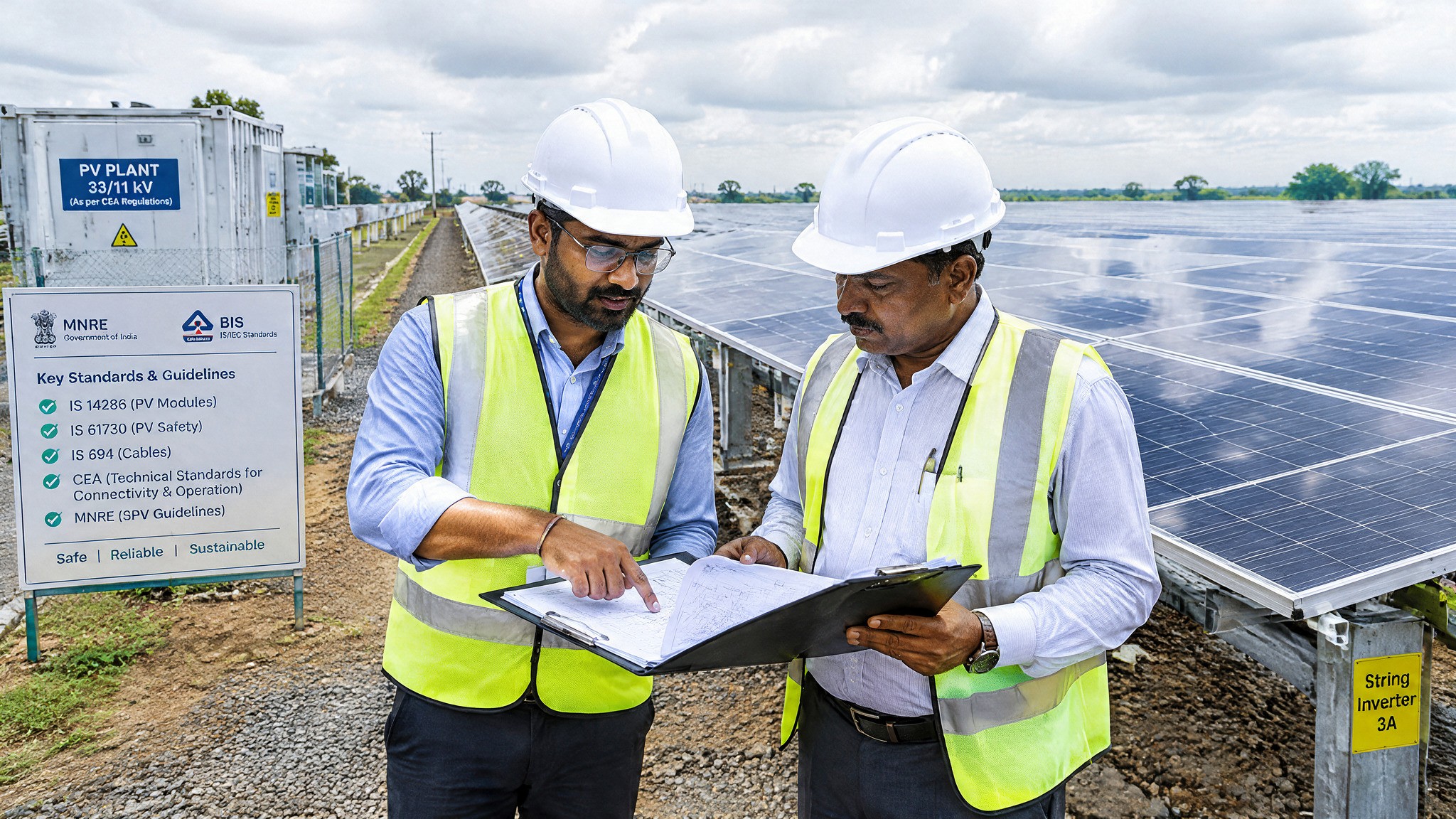
At Green Revolution Powerpark projects, like large-scale ground-mounted plants have shown how design must adapt to terrain, not the other way around. In challenging sites, layouts are refined repeatedly until stability and output align. That discipline is becoming the norm across serious EPC work.
The result is not just capacity installed, but dependable, clean electricity production year after year.
Energy Storage Breakthroughs Supporting Industrial Power
Solar generation is predictable. Industrial demand is not. That gap is where storage is stepping in.
Modern energy storage technologies are no longer experimental for industrial use. Battery prices have fallen, cycle life has improved, and control systems have become smarter.
For factories, battery storage solutions serve clear purposes:
Smoothing short-term grid fluctuations.
Supporting critical loads during brief outages.
Improving the usable share of solar generation during operational hours.
Storage does not eliminate the grid. It reduces dependence on its weakest moments.
The key decision is sizing. Oversized systems waste capital. Undersized systems disappoint expectations. Practical EPC planning now includes honest load analysis, shift patterns, and outage history before recommending storage integration.
The Role of AI and Smart Grid Infrastructure
Energy systems are becoming observant.
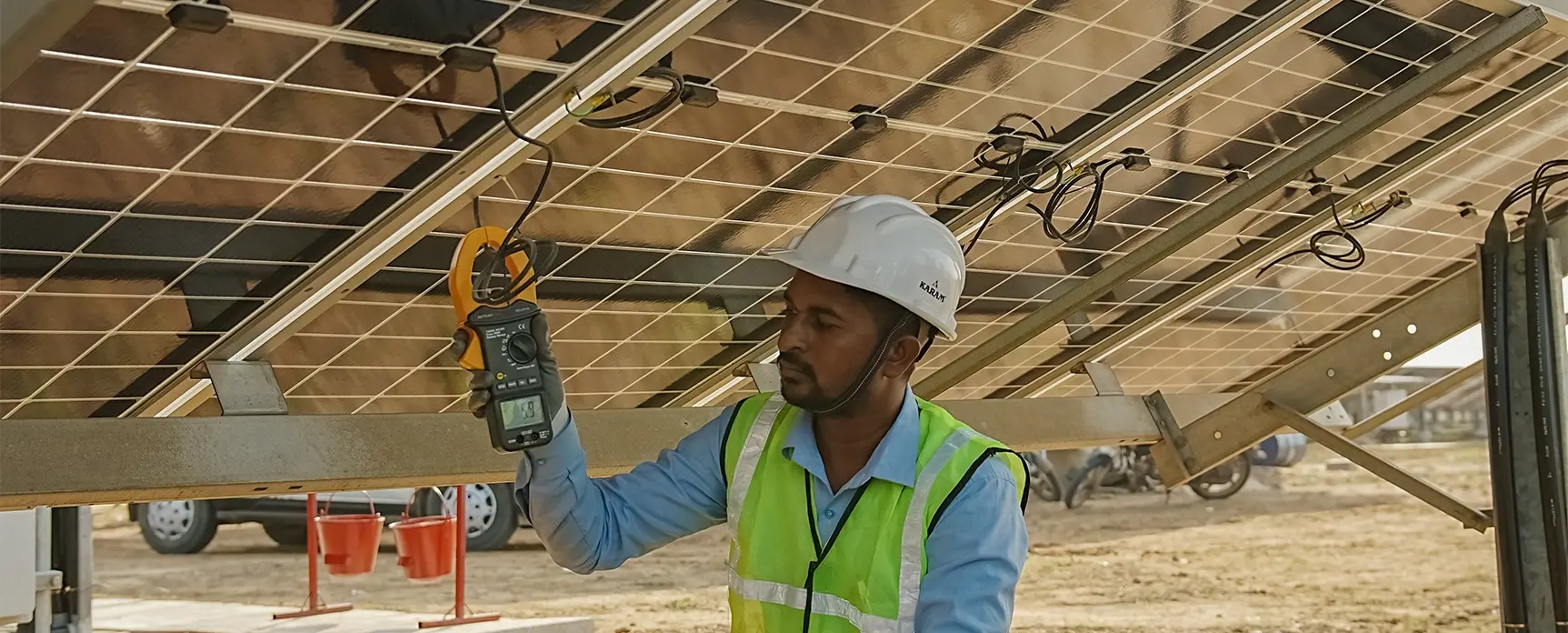
AI-driven monitoring tools now track performance ratios, degradation patterns, and fault detection with surprising accuracy. For plant heads, this means fewer surprises and faster response.
Smart grid solutions help balance supply and demand dynamically. For industrial consumers connected through open access or captive models, this intelligence supports better forecasting and compliance.
What matters here is not the algorithm. It’s the outcome:
Lower downtime.
Clearer visibility into losses.
Faster corrective maintenance.
Data without interpretation is noise. Systems that utilise data to make decisions will unlock value for decision operators.
Decarbonisation in the long-term using Green Hydrogen
There are many industrial processes that cannot operate solely on electricity - this is particularly evident in high heat-intensive operations.
Green hydrogen energy is emerging in these industries over the long run due to the production of green hydrogen itself using renewable power plants. Thus, green hydrogen will provide the means to decarbonise fuel use at times when it is not practical to electrify the fuel supply.
Green hydrogen in India is still at an early stage of development, costs remain high, and there is little to no infrastructure to support its use in most of the industries today. Most factories currently are not using it; as such, green hydrogen is viewed primarily as a long-term strategic option at this time.
Forward-looking industrial planners are:
Tracking policy developments.
Identifying processes where hydrogen could fit in future.
Planning solar capacity with long-term flexibility in mind.
The transition will be gradual. Early understanding will matter more than early adoption.
Decentralised Power and On-Site Generation
Centralised grids were built for a different era. Industries today value control.
Decentralized energy systems enable businesses to manufacture energy at nearby consumption points, which minimizes transmission loss, increases reliability, and enhances energy security.
Manufacturers can obtain from on-site or captive plant facilities the following value-added benefits:
Predictable costs.
Reduced tariff risk.
Increased long-term planning security.
When engineers and production coordinators work closely together during the design stage of renewable power projects, these projects can be seamlessly integrated into industrial production. Load profiles, maintenance windows, and future expansion plans all shape the final design.
Sustainable Power Without the Green Gloss
Sustainability discussions often drift into abstractions. On factory floors, it comes down to numbers.
Sustainable power generation only works when it:
Lowers or stabilises costs.
Maintains operational reliability.
Meets compliance requirements without disruption.
When done right, eco-friendly energy solutions support business resilience, not just environmental goals.
One of GRPP’s utility-scale projects demonstrates this balance well. Despite difficult soil conditions and monsoon constraints, careful planning and execution resulted in consistent annual generation figures. The lesson is simple. Sustainability is engineered, not declared.
Practical Considerations Industrial Leaders Should Weigh
Before committing to long-term energy infrastructure, decision-makers should slow down and ask grounded questions:
Is the system designed for our actual load profile?
How will performance be tracked and maintained?
What happens during grid instability or extreme weather?
Are projections based on conservative assumptions?
These questions separate durable assets from short-lived installations.
The future belongs to companies that plan energy like they plan plants, with patience, data, and accountability.
Looking Ahead
The next decade will not be defined by capacity announcements. It will be defined by performance.
Industries that invest thoughtfully in renewable energy solutions will gain more than cleaner power. They will gain predictability in an unpredictable landscape.
For many, the shift is already underway. For others, the first step is simply understanding the options clearly, without noise or exaggeration.
Energy is no longer just about supply. It’s about design, discipline, and long-term thinking.
And on real land, with real constraints, that mindset makes all the difference.