Complete Guide to Ground Mounted Solar Power Plants in India 2026
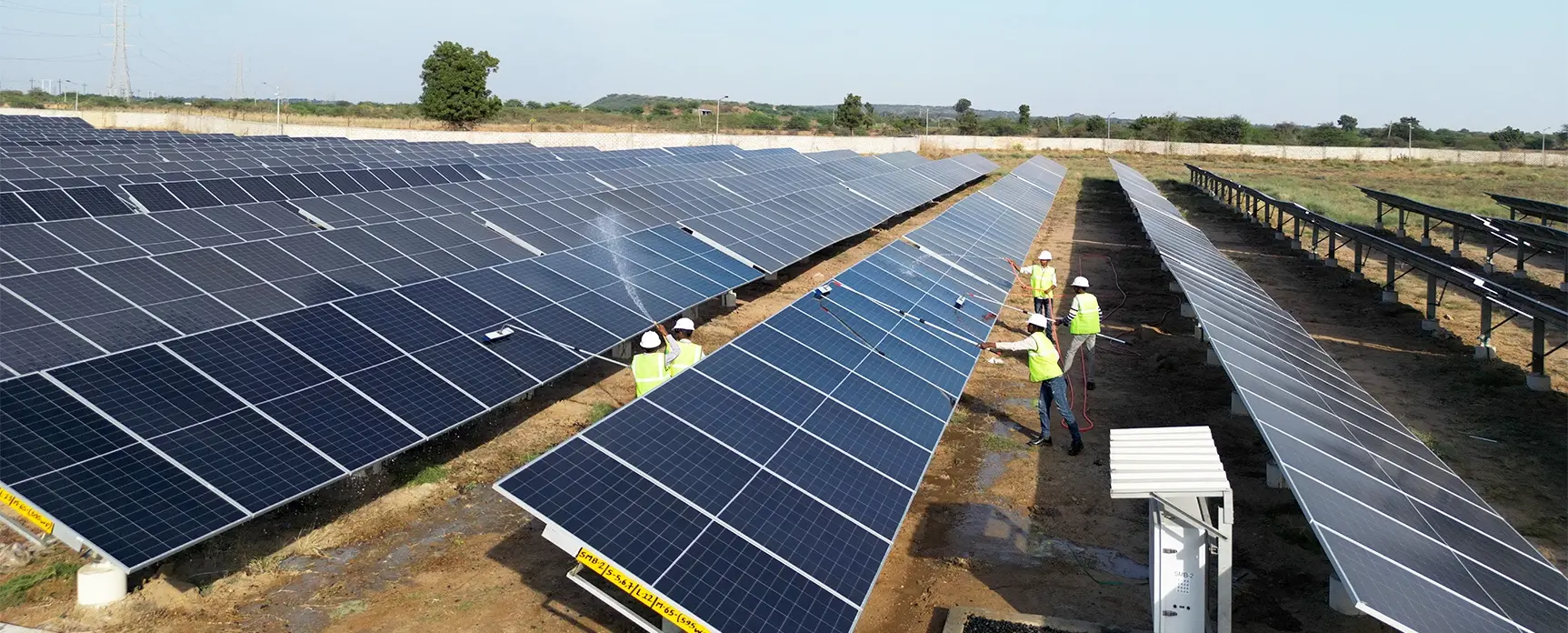
There are moments in industry when a simple truth settles in: energy costs are not going down, reliability matters more than a glossy sustainability report, and executives want something tangible that shows up on day-one balance sheets. For many Indian factories and industrial clusters today, that truth points squarely at solar on open land systems designed to sit on earth, not roofs, and generate power that makes a measurable dent in monthly bills and operational risk.
To understand how these systems operate, what they entail, their costs, and how to view them with real-world accuracy, let’s discuss the four main aspects of a Ground mounted solar power plant. A ground mounted solar power plant consists of a grouping of stationary solar panels situated outside of a building that are designed to collect and convert solar energy into usable electrical energy, known as photovoltaics.
What Is a Ground Mounted Solar Power Plant and How It Works
Ground mounted solar power plants in India are generally much larger than rooftop solar power plants - RSPs and are built for a longer lifespan in an industrial context, predominantly within the country of India.
The basic flow through a Ground Mounted Solar Power Plant consists of:
1. Solar panels collect sunlight in the form of photons through the photovoltaic cells integrated into them to convert the solar energy from sunlight into electric power (DC Electricity).
2. An inverter will convert the DC Electric Energy produced from the Solar Panels to AC electricity to be compatible with most types of industrial equipment.
3. The AC electricity generated can either be consumed by the facility in which the solar panels are located, exported off-site through the local electricity grid, or "wheeled" through an open-access energy supply agreement.
4. The operations crew and sensors are responsible for keeping the solar panel system functioning properly so that our facility generates all possible electricity available.
Multiple designs exist for ground mounted solar farms or plants, despite being around for many years. Factors such as geographical location and utility grid proximity, as well as some of the different types of ground mounted solar farms, and soil composition and type, contribute to the overall variety of designs. For this reason, the careful design and planning of ground mounted solar panels is extremely important.
Types of Ground Mounted Solar Systems
There are a few practical variants you’ll encounter on industrial land. None is fringe; each serves a purpose.
1. Fixed Tilt Systems:
Panels are mounted at a static angle suited to your latitude. Simple. Trouble-free. Lower upfront cost.
2. Seasonal Tilt Adjustment:
You can change the tilt a couple of times a year to eke out a bit more generation. It’s a manual tweak with measurable payoff in some parts of India.
For industrial clients, these are the dominant options. You won’t see fancy trackers everywhere because trackers add moving parts, maintenance, and cost, and the value isn’t always there for every use case.
In the context of site readiness, the choice between these affects your ground mounted solar structure costs, land grading, and long-term upkeep.
Key Components of a Ground Mounted Solar Plant
When someone talks about panels, inverters, and costs, they’re naming parts, not delivering insight. Here’s what really matters:
Solar Panels:
These are where energy generation begins. In Indian conditions with dust and heat, durability and cleaning methodology are as important as efficiency numbers.
Mounting Structure:
Your ground mounted solar structure must withstand monsoon winds, soil movement, and years of sun exposure. Poor design here shows up fast in maintenance headaches.
Inverters:
Inverters are the brains that convert DC to usable AC. Oversizing or undersizing them without context will cost you money in lost generation or premature wear.
Cabling & Safety Equipment:
This is the nervous system. Quality here impacts performance, inspection outcomes, and future trouble tickets.
SCADA / Monitoring:
Without a real-time monitoring platform, you won’t know what’s happening until someone complains about bills or downtime.
Operations Team:
Solar is not “set-and-forget.” Regular cleaning, seasonal checks, and operations that understand how production loads vary ensure your solar operations and maintenance pay dividends.
Requirements for Installing a Ground Mounted Solar Plant
The first thing most industrial leaders ask is: “What do we need to do to put this on our land?” Here’s a practical checklist.
Land Suitability:
Solar likes flat or gently sloping land with minimal shade. Uneven terrain isn’t impossible, but it adds cost. Brownfield spaces are often ideal.
Soil & Geotech Study:
You’d think plants just go on land. Then someone digs post holes and finds loose soil, shale, or waterlogging issues. A simple geotech report saves surprise costs.
Permits & Approvals:
While India’s policy has smoothed many hurdles, open-access or captive power arrangements still require clearances from DISCOMs and state nodal agencies. Engage early.
Grid Connectivity or Interconnection:
If you intend to use or export electricity, you are going to be required to develop an interconnection project that has been approved from a technical perspective for your project. This will require development of protective relaying, along with, in most cases, an appropriately sized transformer for your energy conversion to the load.
Plan For Evacuation:
You will have to pre-determine if your energy will be utilized to directly power the factory load, or if the energy will be utilized in a captive transmission and distribution network, or if it will be wheeled to another location.
Ground Mount Solar Installation: Step-by-Step Work Flow
What transpired on the ground is not what was presented in marketing materials.
Site Survey and Feasibility:
The technical team conducts initial site surveys. Surveys include evaluation of shading patterns, soil analysis, and initial studies of the impact of the project on the electric grid.
Design and Engineering:
The project will have customized engineering drawings that reflect the loads of the project, characteristics of the land, and future expansion capability of the project.
Approval and Permits:
Approval and permitting will require the submission of complete project documentation to the local permitting agency, power utility, and regulatory agency. Approval from each of these agencies may take considerable time if the documentation submitted is not detailed and correct.
Procurement of Components:
Panels, inverters, and structures sourced and quality-checked. This is where experienced solar EPC companies in India, delivering comprehensive solar EPC services in India, differentiate between cheap and mediocre parts and assets built to last.
Civil and Mounting Works:
Before using the panels, civil works such as bases, trenching, and ducting, as well as foundations, must be completed.
Electrical Installations:
The cabling, inverters, circuit breakers, and interconnections to the electricity grid will be finished during the installation phase.
Commissioning:
The commissioning process includes testing and verifying the performance of both safety-related systems and the system as a whole.
Operations and Maintenance:
Once the facility is operational, there will be a structured operations and maintenance program to ensure that the expected operation will occur. If the operational metrics are not met, the cause of the miss will be known.
This process is as much about implementing discipline in the process of installing your system as it is about the physical systems being installed. Many industrial players now prefer partners offering turnkey solar power solutions so that design, engineering, procurement, execution, and maintenance remain under one accountable framework.
Cost, ROI, and Financial Planning for Ground Mounted Solar Systems
In boardrooms, money decisions are at the heart of all discussions. Here are some simple ways to think about them from the ground level up.
Upfront costs:
The major costs related to solar panels consist of purchasing and installing the generator. Construction and electrical systems are included as overhead, and land grading and soil conditions are ongoing issues.
Operating costs:
Solar systems will have ongoing costs associated with the operation of the system, but they will be much less than those of an equivalent generator. Ongoing costs include cleaning cycles, small repairs, and measuring system performance.
ROI Expectations:
For industrial systems built with real maintenance plans, ROI is often in the 4-7 year range in India with current tariffs. That depends on your tariff, financing terms, and usage patterns.
Financing Options:
Look at term loans tied to equipment life, leasing arrangements, or energy service agreements where a partner assumes risk, and you pay for the power used.
Be suspicious of overly rosy ROI figures. If someone just quotes simple payback without talking about O&M, soiling losses, and inverter replacements after 8 years, press for clarity.
For perspective, even the biggest solar power plant in India began with the same fundamentals: land assessment, disciplined engineering, and long-term financial modelling. Scale changes numbers, not principles.
Advantages of Ground Mounted Solar Power Plants
Let’s cut through the brochure language and talk about real benefits for an industrial site.
1. Cost Control: Once installed and commissioned, power costs become far more predictable. No petrol price swings. No fuel logistics.
2. Operational Reliability: Well-designed ground mount solar systems run quietly with minimal interruptions. With good solar operations and maintenance, downtimes are rare.
3. Scalability: Open land gives you room to grow. Add more capacity when demand increases.
4. Longevity of Assets: Structures and panels are designed for a minimum of 25+ years of service with carefully selected components to allow accurate estimation of degradation.
5. Links to Sustainable Development Goals: This is not PR fluff; it’s emissions reduction that can be measured. Real reductions attract the attention of stakeholders and regulatory agencies, not catch phrases.
Final Take
Installing a ground mounted solar power plant is not like your average infrastructure project, where surprises are expected and budgets flex. You need clarity on design, honesty about costs, and a partner who understands land realities, regulatory processes, and industrial load patterns.
Remember this: solar success is not about shiny panels. It’s about thoughtful planning, realistic expectations, and execution discipline.
In India today, where energy costs bite and sustainability is increasingly tied to financial metrics, ground mount solar systems are not a sideways add-on. They’re becoming part of how smart industrial leaders think about energy strategy.
When choosing partners, evaluate them based on their depth rather than hype. Look for feasibility studies that provide real-world cost estimates and have demonstrated an ability to successfully deliver ground mounted solar projects without any struggles behind the scenes. This type of clarity will help you save money and create long-lasting power.


