Ground Mounted Solar Power Plant Case Studies Gujarat Factories Saving ₹50 Lakh+
A factory owner in Gujarat doesn’t wake up thinking about solar panels. They wake up thinking about power bills that don’t make sense anymore.
Not because electricity is new. But because unpredictability is.
Tariffs shift. Diesel backup costs creep in. Expansion plans get delayed because energy is no longer a stable input. Somewhere in that pressure, the conversation around captive solar stops being “sustainability” and starts becoming basic operational logic.
And that’s exactly where many industrial units in Gujarat find themselves in 2026.
Why Gujarat's Industrial Units Are Moving Toward Ground-Based Solar
Gujarat has always been ahead in industrial infrastructure. What’s changed now is the urgency around energy control.
Three patterns are showing up across manufacturing clusters:
The unpredictable price of energy :
The fluctuations in energy prices month to month are affecting the decision process for cost comparisons, especially in the ceramics, textiles, and chemical industries.
A new view of real estate across Gujarat:
Manufacturers are now considering their idle or underused land next to their manufacturing facility as a potential source of energy, rather than simply a buffer to separate themselves from other manufacturers.
Sharper focus on long term planning:
As manufacturers have shifted from reacting to increasing prices to long-term planning of 15-20 years out.
This is where solutions like a ground mounted solar power plant Gujarat are becoming practical. Not aspirational. Not experimental. Just logical.
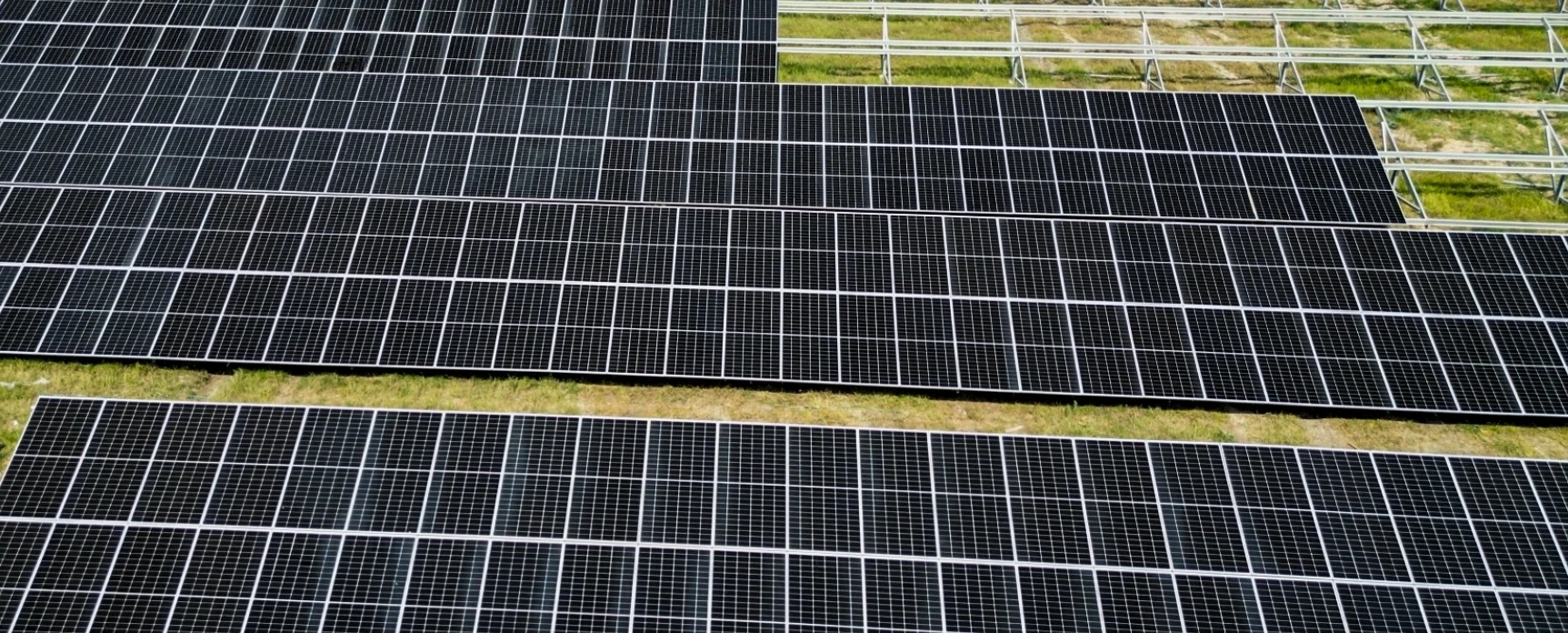
Unlike rooftop constraints, ground installations allow better layout optimization, higher capacity, and easier maintenance access. For factories with available land, it becomes a straightforward infrastructure decision.
Case Study 1: Ramest Group - 14 MW Industrial Installation
Large-scale industrial players usually don’t experiment casually. They commit only when numbers, land feasibility, and execution capability align.
Ramest Group’s 14 MW installation is a good example of that thinking.
Scale: 14 MW
Use Case: Industrial power consumption across operations
Outcome: Significant reduction in grid dependency and long-term cost stability
What stands out here is not just capacity. It’s the planning.
A project of this size demands:
Precise engineering layout to maximize generation.
Reliable procurement to avoid component mismatches.
Strong commissioning discipline to ensure performance ratios stay within expected ranges.
This is where the role of a ground mounted solar plant for factories becomes more than just installation. It becomes infrastructure planning.
Case Study 2: Millenia Tiles Pvt. Ltd - 3.9 MW
Smaller than Ramest, but just as relevant.
Millenia Tiles operates in a sector where energy cost directly affects product pricing competitiveness.
Scale: 3.9 MW
Industry: Ceramic manufacturing
Impact: Controlled power cost and improved predictability
The interesting part here is how mid-sized industrial units are approaching solar differently:
Not as a one-time cost-saving measure
But as a way to stabilize long-term margins
For many ceramic units in Gujarat, this shift is becoming common. Once one factory stabilizes its energy cost, the entire competitive landscape changes.
And suddenly, others don’t have the luxury to ignore it.
Investment vs Returns: What the Numbers Actually Look Like
This is where most blogs either oversimplify or exaggerate. Let’s keep it grounded.
A typical solar power plant for industry involves:
Initial investment: Depends on capacity, land conditions, and component quality
Payback period: Usually 3-5 years for industrial setups
Plant life: 20-25 years
What matters more than the headline ROI is consistency.
Stable generation (measured through CUF - Capacity Utilization Factor)
Efficient system performance (PR - Performance Ratio)
Minimal downtime
Over time, even a small drop in efficiency compounds into real financial loss.
This is why companies are not just looking for solar EPC companies in Gujarat, but specifically those who understand lifecycle performance, not just installation.
Because saving ₹50 lakh annually doesn’t come from just putting panels on land. It comes from keeping the system performing year after year.
What a Ground Mounted Solar Power Plant Really Demands
Not because solar is complex. But because execution discipline is.
A ground mounted solar power plant is not a product. It’s a system with multiple layers:
Land preparation: Soil conditions, leveling, drainage. Ignore this and you’ll pay for it later.
Structural design: Mounting systems must withstand local wind loads and long-term exposure.
Electrical design: Cable routing, inverter placement, and protection systems directly affect efficiency.
Performance monitoring: Real-time tracking ensures issues are detected early.
Operation & maintenance: Regular cleaning, inspections, and preventive checks maintain output.
A reliable ground mounted solar EPC company Gujarat doesn’t just install. It stays accountable.
GRPP’s Approach: End-to-End Without Noise
Most companies claim “turnkey.” Few actually mean it.
A true turnkey ground mounted solar EPC process typically includes:
Feasibility study and site assessment
Detailed engineering and design
Procurement of certified components
Installation and commissioning
Long-term solar plant operation and maintenance
What separates a capable EPC partner is not how much they promise. It’s how quietly and consistently they execute.
Green Revolution Powerpark operates in that space.
Not loud. Not flashy. Just structured work across real industrial sites.
Is Your Factory Ready for a Ground Mounted Solar Power Plant?
This isn’t a yes-or-no checklist. It’s a practical evaluation.
Look at your current situation:
Do you have available land near your facility?
Even a few acres can support meaningful capacity.Are energy costs affecting pricing or margins?
If yes, waiting usually makes it worse.Is your power consumption consistent?
Stable consumption patterns make solar more viable.Are you planning long-term operations at the same location?
Solar works best when aligned with long-term facility planning.
If these conditions are already in place, then exploring a ground mounted solar power plant is less about “if” and more about “when.”
The Quiet Shift Happening Across Gujarat
This transition isn’t being announced loudly. No big headlines. No dramatic industry-wide declarations.
But across industrial clusters, something is clearly changing: Factories are moving from reacting to electricity costs to controlling them.
And that shift is not driven by trends. It’s driven by arithmetic.
One Last Thought
A solar plant is installed in a few months. Its performance is judged over decades.
That gap between installation and long-term output is where most decisions succeed or fail.
The companies saving ₹50 lakh or more annually are not the ones that rushed into solar. They are the ones who treated it like infrastructure, not an experiment.
And chose partners who understood that responsibility.


