2MW Solar Power Plant cost in Gujarat, India 2026
Factories don’t usually think about electricity until something goes wrong. A voltage dip. A surprise tariff revision. A diesel generator kicking in at the worst possible time. And suddenly, energy is not just a utility cost, it’s a business risk.
That’s exactly why more industrial units in Gujarat are quietly moving toward captive solar. Not for headlines. For control.
This blog explains a 2 MW plant is genuinely what a 2 MW power plant looks like on the ground, what its price would be in 2026, and the kind of profit you can reasonably hope for.
Understanding a 2 MW Solar Power Plant
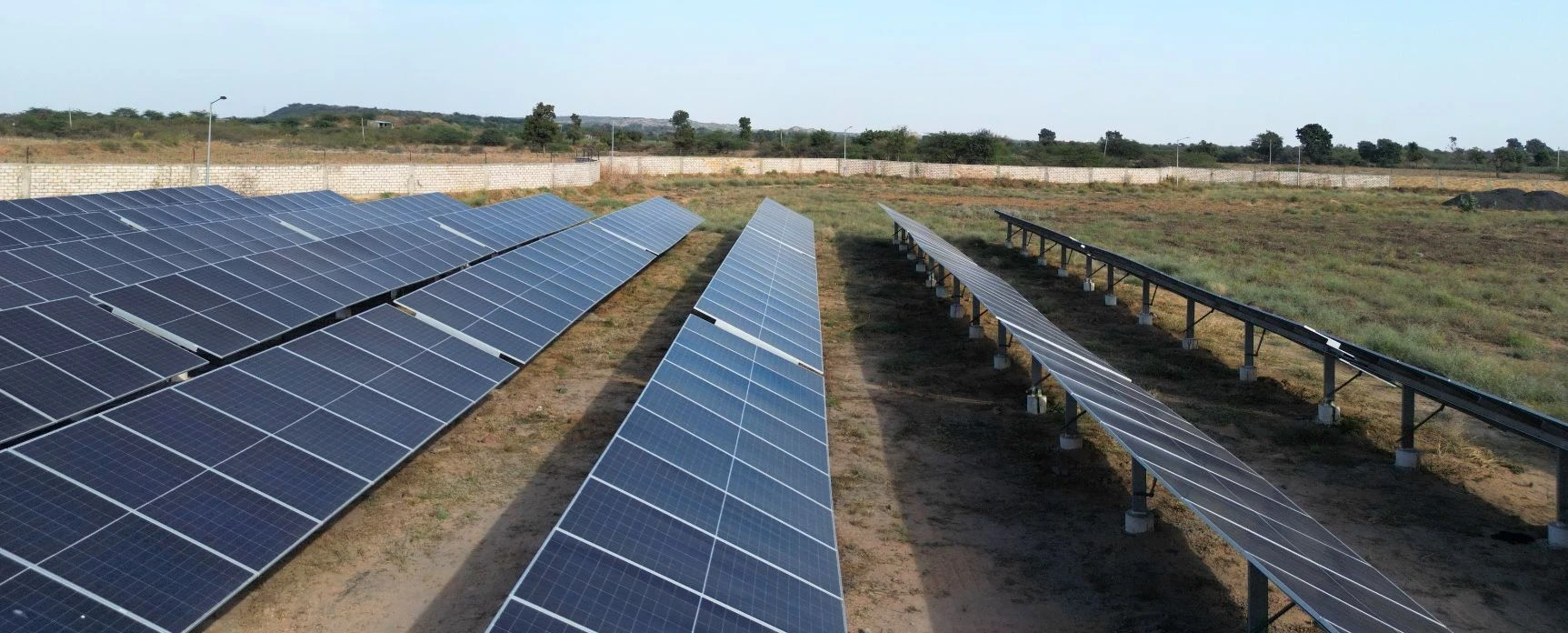
A 2 MW plant is not a small rooftop experiment. It’s a ground mounted solar power plant designed to power medium to large industrial operations.
In practical terms:
It can support a factory with significant daytime load
It offsets a large portion of grid electricity consumption
It reduces dependency on unpredictable tariff hikes
Based on the current market average, 2 MW solar systems have 5,000 to 6,000 high-efficiency solar panels, depending on their technology and design.
At this level of sophistication, the solar plant has more of an infrastructure feel than being seen as an accessory to your current electricity generation system.
2 MW Solar Power Plant Cost in the Gujarat State
Now for the question that most people actually want to know the answer to! Approximately what are the costs associated with building a solar power system in Gujarat?
In 2026, 2 MW solar power plants are expected to cost between Rs. 7.5 Crore and Rs.9 Crore.
This range depends on:
Module quality and efficiency
Land conditions and site development needs
Distance from grid connection points
EPC execution quality
To give context:
The 1 MW solar power plant cost today ranges roughly between ₹3.8-₹4.5 crore
So a 2 MW project benefits slightly from scale efficiencies
But here’s the part most blogs won’t tell you: Cheaper EPC rarely means cheaper power over time.
Cutting corners in structure, cabling, or design can quietly reduce generation for 25 years. That’s where the real cost sits.
Land Requirement for a 2 MW Solar Plant
For a ground mounted solar power plant, land is non-negotiable. A 2 MW system generally requires 8 to 10 acres of land.
This depends on:
Panel efficiency (higher efficiency = less land)
Layout design
Terrain and shading conditions
In Gujarat, land availability is relatively better compared to other industrial states. But proximity matters.
Land far from your load center can increase transmission losses and infrastructure costs. So the decision is not just “how much land,” but “where that land is.”
Energy Generation and Revenue Potential
A 2 MW plant in Gujarat typically generates 30-34 lakh units per year.
This assumes:
CUF (Capacity Utilization Factor) of ~17-19%
(Simply put: how efficiently your plant converts sunlight into usable energy over time)
Now, let’s translate that into value.
If your factory pays ₹7-₹9 per unit from DISCOM:
Annual savings: ₹2.1 crore to ₹3 crore
If you’re using diesel backup at ₹15+ per unit, the savings jump even higher.
This is why commercial solar power projects are no longer a “green initiative.” They’re a cost strategy.
Revenue and Payback Period
Now the uncomfortable question. How long before you recover your investment?
The typical payback period of solar power plant is 3.5 to 5 years.
After that:
Power is essentially free (excluding minimal O&M costs)
Plant continues generating for 20+ years
This is where solar beats most capital investments. You’re locking in energy costs today for the next two decades.
Key Factors Affecting Solar Power Plant Cost
Not all solar plant cost structures are created equal. Two projects with the same capacity can perform very differently.
Here’s what actually impacts cost and performance:
1. Module Quality
Higher efficiency panels generate more power in the same area. Cheaper panels degrade faster.
2. Design & Engineering
Panel tilt, spacing, and orientation directly affect generation. Bad design quietly reduces output every single day.
3. Electrical Infrastructure
Inverters, transformers, and cabling quality decide how much energy actually reaches your plant.
4. Installation Quality
Poor execution leads to long-term issues like:
Loose connections
Higher losses
Maintenance headaches
5. Solar Operations and Maintenance
Ignoring solar operations and maintenance is like buying a machine and never servicing it.
Regular cleaning, monitoring, and preventive checks ensure consistent output.
A Ground Reality Example
One of the patterns seen across industrial projects is simple:
Two factories install similar-sized plants.
One chooses a low-cost solar plant installation company
The other focuses on long-term performance
Five years later:
The cheaper plant shows reduced generation
The better-built plant delivers stable output
The difference? Not visible on Day 1. Very visible by Year 5.
Why Choose GRPP - A Reliable Solar EPC Company in Gujarat, India
There’s no shortage of solar EPC companies in Gujarat, India. The difference lies in how they approach the work.
Green Revolution Powerpark doesn’t position itself as a vendor. It operates like a long-term partner.
Their approach is built around:
Site-first thinking: Understanding land, load, and real constraints before designing
Strong engineering discipline: Not just installation, but performance-focused design
End-to-end solar EPC services: From feasibility to commissioning
Reliable solar operations and maintenance: Because generation doesn’t end at commissioning
One of their industrial projects highlighted how better layout optimization improved annual output without increasing plant size. Small design decisions, long-term impact.
This is where a dependable solar EPC company in Gujarat, India earns its value.
How to Think About This Investment
If you’re evaluating solar purely as a capital expense, you’ll miss the point.
Think of it as:
A hedge against rising electricity tariffs
A way to stabilize operating costs
A long-term infrastructure asset
Also, compare it with alternatives:
Diesel generators are expensive and unpredictable
Grid power tariffs rarely go down
Solar gives you control. Quietly, consistently.
Common Misjudgments Industries Make
Let’s save you from a few avoidable mistakes:
Choosing EPC based on lowest cost: This almost always shows up later as poor performance.
Ignoring land planning: Distance and layout decisions affect efficiency.
Not planning maintenance early: Generation drops without proper upkeep.
Unrealistic Expectations & the Reality of Solar.
Final Thoughts
A 2 MW plant should be thought of as a long-term decision involving multiple aspects of finance, engineering, and operations, and this is why it should not be considered to be only numbers on a page.
Gujarat has many favourable conditions for a solar plant: consistent sunlight, stable policies in place, and a strong industrial demand.
So the question isn’t whether solar makes sense. It’s whether you approach it like a short-term purchase or long-term infrastructure.
That decision changes everything.


