A Complete Decision-Making Guide for Industries Considering Solar
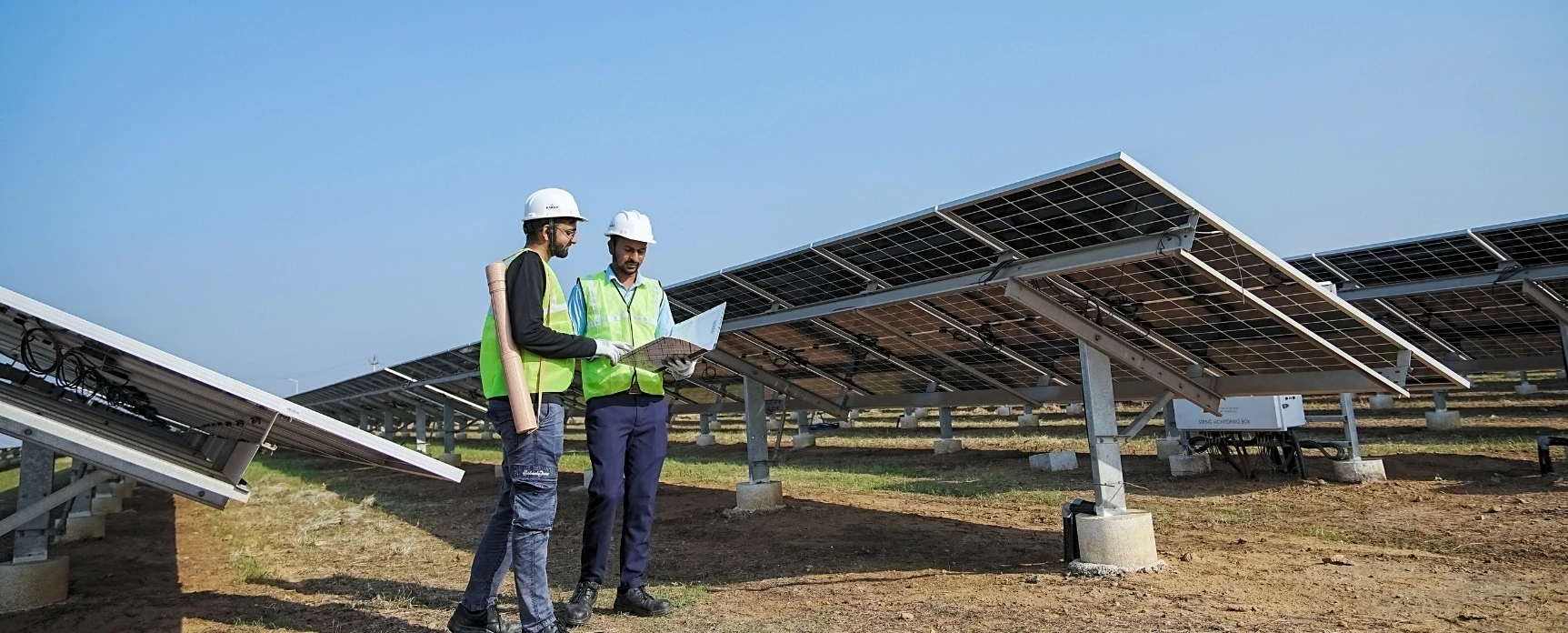
Some factory decisions are loud. New machinery. Expansion. Hiring. Everyone sees them.
Energy decisions are quieter. They sit in monthly bills, in cost sheets, in those small pricing compromises no one talks about openly. And then one day, they stop being quiet.
That is where solar usually enters the conversation. Not as a trend. As a correction.
Why Gujarat Industries Are Rapidly Adopting Solar Energy in 2026
Gujarat has long been at the forefront of establishing an industrial base but now there is a new motivation to switch to solar energy - urgency rather than awareness.
There are three primary drivers pushing solar energy for manufacturing industries:
The rising and unpredictable cost of energy:
Manufacturers are facing an increasing amount of uncertainty due to the fluctuating price of electricity. Therefore, even though the actual cost of purchasing electricity has increased, the more significant issue for many manufacturers is the inability to predict future energy prices.
Policy clarity and open access frameworks:
Gujarat continues to support industrial solar adoption through relatively stable policies. This reduces long-term risk for companies planning a solar power plant for industry.
Operational pressure:
Buyers, especially global clients, are asking questions about sustainability. Not in reports, but in contracts.
A quiet shift is happening. Earlier, solar was seen as an add-on. Today, it is becoming part of core energy planning.
Is Your Industry Suitable for Solar? Key Feasibility Factors to Check
Not every facility should jump into an industrial solar installation. And honestly, rushing into it blindly is a great way to waste money with confidence.
Start with a solar feasibility report. It is less about optimism and more about math and ground reality.
Here’s what actually matters:
Energy consumption pattern:
Stable, day-time heavy consumption works best. If your load fluctuates wildly, your system design needs to adapt.
Available land or usable space:
An industrial solar plant needs proper layout planning. Irregular land shapes, shading, or poor soil conditions can impact performance.
Electrical infrastructure readiness:
Your existing system should be able to integrate without becoming a bottleneck.
Regulatory alignment:
Open access approvals, connectivity, and state policies need to be checked early. Delays here can quietly stretch timelines.
A good feasibility study doesn’t just say “yes, you can install solar.” It tells you how efficiently you can run it for the next 20+ years.
Read More: How Solar EPC Companies in Gujarat Optimize ROI for Industrial Plants
Solar Plant Cost, ROI & Payback Period for Industrial Units in Gujarat
Let’s get to the part everyone pretends is not the only thing they care about.
Cost.
For an industrial solar power plant, pricing depends on system size, land conditions, and grid integration requirements. But broadly:
Cost range: ₹3.5-₹5 crore per MW
Payback period: Typically 3.5 to 5 years
System life: 20-25 years
What does this mean in practice?
If your plant runs consistently, solar starts behaving less like an expense and more like a hedge against future tariff shocks.
Also, one thing rarely discussed clearly:
CUF (Capacity Utilization Factor)
This tells you how much energy your plant actually produces compared to its maximum capacity. In Gujarat, CUF for solar typically ranges between 18-22%.
Higher CUF = better returns. Simple, but often ignored.
CAPEX vs OPEX Solar Models: Which One Should You Choose?
The classic dilemma. Own it or outsource it.
And no, there is no universally “better” answer. It depends on your financial and operational priorities.
CAPEX Model (Ownership Model)
Also referred to as the solar capex model or capex model solar.
You invest upfront
You own the asset
You get maximum long-term savings
Works well if:
You have capital available
You think long-term
You want control over your solar operations and maintenance
OPEX Model (Pay-as-you-use Model)
Also called the solar opex model or opex model solar.
No upfront investment
You pay for power consumed
Third-party owns and manages the plant
Works well if:
You want zero capital expenditure
You prefer predictable operational costs
You don’t want to manage a solar O&M contract
The real difference in CAPEX vs OPEX solar model is not just financial. It’s about how involved you want to be in your energy infrastructure.
Rooftop vs Ground-Mounted Solar: What’s Right for Your Facility?
Here’s where most blogs throw generic comparisons. Let’s keep it grounded.
For industrial setups in Gujarat, ground-mounted systems are often preferred for scale and performance.
Why?
Better layout control: You can design for optimal tilt, spacing, and maintenance access.
Higher efficiency potential: Less constraint compared to rooftop structures.
Easier scalability: Expansion is more practical when you have dedicated land.
However, land availability and cost play a role. Not every facility has the luxury of unused land. The right answer is rarely emotional. It’s logistical.
Choosing Among the Best Solar EPC Companies in Gujarat, India
This is where things get messy. Because on paper, many vendors look identical. Same promises. Same numbers. Same confidence.
But EPC - Engineering, Procurement, and Construction is not about selling a system. It is about building something that keeps working quietly for decades.
When evaluating solar plant company in Gujarat, focus on:
Execution experience:
Not simply the number of completed projects, but the number of ongoing performing projects.
Engineering depth:
The applicant needs to articulate their design rationale understandably; they can’t rely solely on jargon or technical terms.
End to end ability:
An established solar plant installation company has an in-depth understanding of industrial solar work on every aspect of the system from its conception through to finished product commissioning.
Operation and maintenance (O&M) commitment:
Long term performance is directly linked to ongoing solar O&M support.
For example, companies like Green Revolution Powerpark focus heavily on feasibility-first planning and long-term O&M, not just installation. Their approach is reflected in projects that prioritize performance over speed.
And that matters more than a fast commissioning timeline.
A Ground Reality Most Industries Miss
Installing a plant is a one-time event. Running it well is a 20-year responsibility.
The real difference between an average vendor and the best solar EPC companies in Gujarat, India, doesn’t show up during installation.
It is discipline.
Regular monitoring
Preventive maintenance
Performance tracking
Quick issue resolution
This is where many industrial solar projects quietly lose efficiency over time. And no one notices until the numbers stop making sense.
Where Most Decision-Making Goes Wrong
Not in technology.
Not in cost.
But in timing.
Industries often wait for “perfect clarity.” Stable tariffs. Final policies. Ideal conditions. That moment rarely comes.
Meanwhile, those who start early benefit from:
Lower locked-in energy costs
Faster ROI cycles
Better positioning with sustainability-focused clients
Solar is not about predicting the future perfectly. It is about reducing how much the future can surprise you.
Final Thought
A solar decision is not really about panels or megawatts. It is about control.
Control over costs.
Control over planning.
Control over how exposed your business is to external shifts.
The question is not whether solar works. It already does.
The real question is whether your current energy setup is working well enough to ignore it.


