How Renewable Energy Solutions Help Businesses Cut Electricity Costs
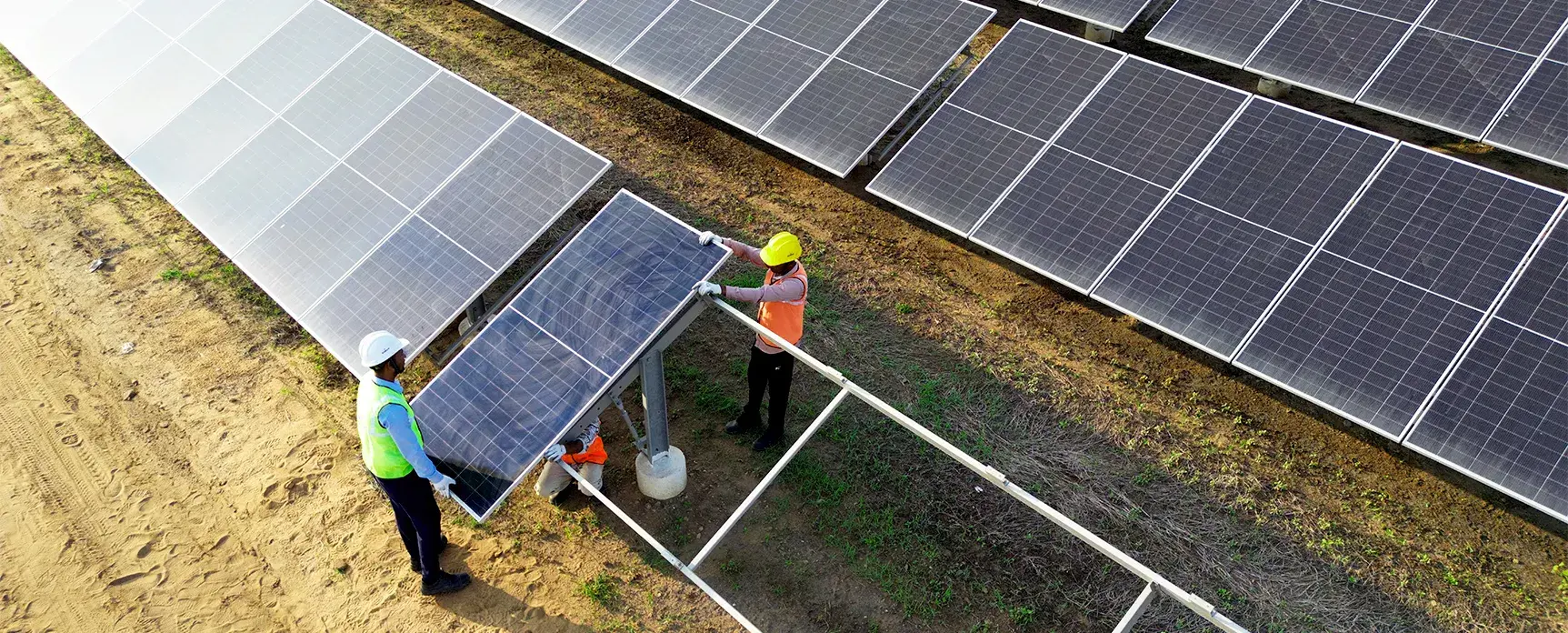
Electricity has quietly become one of the biggest line items on an industrial balance sheet. For many factories, power costs now fluctuate almost as much as raw material prices. Tariffs rise. Demand charges increase. Grid reliability varies from region to region. A plant that runs 18-24 hours a day cannot afford uncertainty in energy supply.
So industrial leaders across India are beginning to ask a practical question: Is energy something we should still buy entirely from the grid… or something we should partially produce ourselves?
That question is pushing many businesses toward solar power plants built directly for industrial consumption. Not because sustainability looks good in a report, but because the economics are starting to make sense. This shift is where renewable energy solutions begin to matter for industry.
What Are Renewable Energy Solutions for Businesses?
In an industrial setting, renewable energy solutions refer to systems that allow a company to generate clean electricity on land available to them or through dedicated power infrastructure designed for industrial demand.
For most factories, this means installing a solar power plant for industry designed to supply a portion of the plant’s daily electricity requirement.
Instead of relying entirely on the grid, businesses produce part of their power independently. A typical industrial solar project usually includes:
Feasibility assessment: Evaluate land potential, power needs, and connectivity through the grid
Engineering design: Establishing the capacity of the plant for usage, where to put the modules, and the efficiencies of the system.
Procurement and Installation: Obtain equipment and construct the solar infrastructure.
Grid synchronization and Commissioning: Integrate the plant into the electrical grid.
O&M - Operations and Maintenance: To guarantee good performance for twenty-five or more years.
Several industrial companies partner with a renewable energy solutions company to provide turn-key solutions that support the complete project life cycle. Building a solar asset that reliably generates energy for the factory for 25 years is the most important goal when developing these projects.
How Solar Power Plants Reduce Commercial & Industrial Electricity Bills
The Energy Sector's use of solar energy is very different from traditional grid-based electric generation.
In the Industrial and Commercial sectors, solar energy has several advantages through the installation of Solar Power Plants. The cost of purchasing electricity from the grid can be substantially reduced. For example:
1. The price to generate energy is consistently known.
Once a solar plant has been built, the majority of the cost has already been paid. The only cost associated with generating power from a solar plant is the fuel, sunlight, which doesn't have a tariff escalation.
2. Peak daytime production matches industrial usage
The time of day when increased energy usage occurs for industrial users coincides with the peak production times of solar plants.
Most manufacturing operations have much of their operating activity in the daytime, as do many commercial operations. Therefore, there is a direct correlation between solar energy being produced during the daytime and the period of time when there is considerable energy demand.
3. Reduced dependency on grid tariff escalation
As a result of the projection of increasing prices to purchase electricity from the grid, the use of renewable energy sources, such as solar, will strengthen the overall stability of energy pricing for a period of many decades.
4. Lower energy network losses
Electricity produced near the end users eliminates some of the cost associated with long-distance distribution. In the long run, making use of these factors can reduce a company's electricity costs substantially on a per-unit basis.
For example, the cost to operate energy-intensive businesses in the manufacturing, textile, engineering, and food production industries can be greatly reduced by this practice.
Ground Mounted Solar vs Grid Power: Cost Comparison & ROI Analysis
Industrial facilities with access to land often install a ground mounted solar power plant because it allows higher generation capacity and better system performance.
Compared to grid electricity, the difference in cost over time becomes clear.
Grid electricity
Tariffs subject to annual increases
Demand charges and surcharges
Exposure to policy and infrastructure changes
Ongoing operational cost
Ground mounted solar power plant
One-time capital investment
Stable generation cost over decades
Predictable return on investment
Reduced long-term tariff exposure
For the most part, industrial solar installations typically have an average project lifecycle of between four and six years, depending upon location, design, and electricity pricing.
Once the payback has been achieved, the production of power becomes almost completely free with marginal, ongoing operation costs.
This is one key reason that more and more businesses view industrial renewable energy solutions as a true financial decision, and rather than simply "green," as an asset for the business instead of a recurring cost every month.
Turnkey Solar Power Services Create Fast Installations and Reduced Operating Expenses
Solar power infrastructure involves many different disciplines, i.e., engineering, purchasing, civil construction, electrical work, and regulatory requirements.
If these activities are managed individually, there may be significant delays or risks associated with the project. Therefore, many companies prefer to use a single source of turnkey solar power solutions to manage the entire project, resulting in reduced risk and the elimination of waste of time and money.
Typical solar EPC services include:
Site feasibility analysis
Engineering and system design
Equipment procurement
Construction and installation
Grid connection and commissioning
Several solar EPC companies in India offer these services, but industrial buyers often evaluate partners based on long-term performance, not just installation capability.
Experienced solar EPC services in India usually focus on:
High-efficiency system design
Reliable component sourcing
Engineering suited for Indian climate conditions
Long-term performance monitoring
The difference between a rushed installation and a carefully engineered plant can affect generation efficiency for decades.
That is why companies often compare the track record of top solar EPC companies in India before committing to a project.
Solar infrastructure is a long-term asset. The design decisions made during construction influence the plant’s output for the next 25 years.
Government Subsidies & Tax Benefits in India
India’s energy transition policies are designed to encourage industrial solar adoption. While incentives vary across states and regulatory frameworks, several financial benefits can make solar projects more attractive.
These include:
Accelerated depreciation
Businesses installing solar plants can claim accelerated depreciation under the Income Tax Act. This reduces taxable income during the early years of the project.
GST advantages on equipment
Solar equipment falls under favorable GST categories, lowering initial project costs compared with many other infrastructure investments.
State-level incentives
Some states provide additional support mechanisms, including the banking of solar power or favorable wheeling policies.
Strategic Use of Large Scale Green Energy
There's been an accelerated growth of renewable energy, thanks to many different methods from many different industries, facilitating the change to Renewable Energy companies in India.
For the business community, it's clear that energy planning includes not just tariffs but also Government Policy Incentives, both of which should be accounted for through your total Cost Benefit Analysis.
As a result of this knowledge, more than one company pursuing "Renewables" has now become focused solely on utilizing Solar as their means of producing Electrical Energy for Industry.
O&M Strategies for Maximizing Energy Savings via Return on Investment
Because the operational performance of solar plants will rely heavily on the O&M Strategy that is implemented, they will have a material impact on the return realized via return on investment, base rate of return after the Solar Plant has been installed.
In addition to the operational prohibitions and maintenance procedures that must be followed, the real-world factors associated with industrial solar power plant locations will have an impact on the amount of energy produced.
Strong maintenance practices usually include:
Regular module cleaning
Dust accumulation can reduce solar panel output. Scheduled cleaning helps maintain generation efficiency.
Electrical system inspections
Inverters, transformers, and connection systems require periodic checks to prevent unexpected downtime.
Performance monitoring
A smart energy monitoring system tracks generation data, identifying underperforming modules or system irregularities.
Preventive maintenance
Scheduled inspections allow small technical issues to be fixed before they affect overall production.
Over time, disciplined solar operations and maintenance ensure the plant continues delivering reliable solar green energy solutions to the facility.
This is where a dependable solar plant company becomes valuable. Long-term service support often determines how well the system performs across decades.
A Different Way to Think About Industrial Energy
Industrial leaders rarely get the luxury of thinking about electricity philosophically. Energy is usually just a bill that arrives every month.
But something subtle is changing. When a company installs its own solar infrastructure, electricity stops being just a recurring cost. It becomes a managed resource.
Factories gain greater visibility into how energy is generated, used, and saved. Cost volatility reduces. Planning becomes easier.
This shift is why more businesses are exploring renewable energy solutions as part of a long-term industrial strategy.
Not because it sounds progressive. Because the numbers, increasingly, make practical sense. And because energy independence has quietly become one of the most valuable assets an industrial facility can build.


