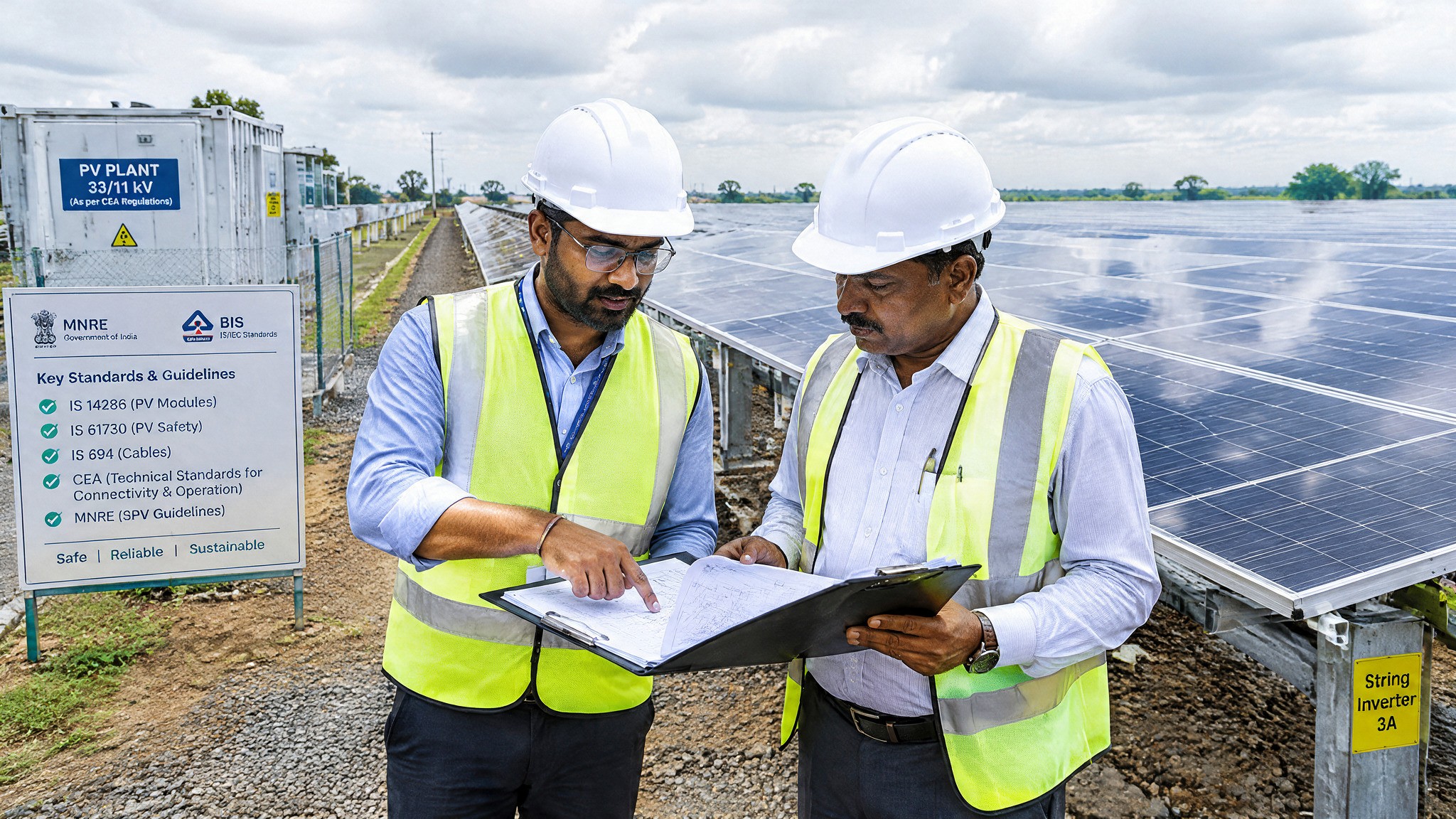
Solar Plant Safety: Earthing, Lightning Protection and Fire Prevention Explained

A solar plant is a live electrical installation that sits in open air for 25 years. It faces heat, rain, lightning, dust and animals every day.
Most serious plant failures do not come from a defective module. They come from basic safety work that was skipped or rushed: weak earthing, missing surge protection or loose connections.
This blog explains the safety layers every industrial plant should have.
This is general guidance. Follow applicable standards and statutory requirements, and rely on your qualified engineers for design.
Why Safety Is a Performance Issue Too
Safety and returns are linked. A fault that trips an inverter costs generation. A fire costs the plant. A damaged transformer can take the whole site offline for weeks. Good safety design protects both people and income.
Layer 1: Earthing
Earthing gives fault current a safe path into the ground. In a solar plant it covers:
Module frames and mounting structures
Inverters and combiner boxes
Transformer and switchgear
Cable trays and metal enclosures
What good earthing needs:
Earth pits designed for local soil conditions
Low and tested earth resistance [verify target values against applicable standards]
Continuous bonding across all metal parts, with no breaks
Corrosion-resistant materials in salty or damp areas
Common error: Installing earth pits, then never testing them again. Soil moisture changes, and resistance changes with it.
Layer 2: Lightning Protection
Open plants with tall metallic structures attract lightning. A direct or nearby strike can damage inverters, monitoring equipment and cables.
A proper system includes:
Lightning arrestors or air terminals placed by design, not by guess
Down conductors connected to the earthing grid
A earthing network that connects all protection points
Lightning risk varies by location, so a risk assessment should drive the design.
Layer 3: Surge Protection Devices (SPDs)
Even a distant strike or grid disturbance can send a voltage surge through cables. SPDs divert it away from sensitive equipment.
DC side: SPDs at combiner boxes and inverter inputs
AC side: SPDs at inverter outputs and the main panel
Check that SPDs are rated for the system voltage and replaced when they show a failure indicator.
Layer 4: Fire Prevention
Fire risk in solar plants usually comes from heat at a bad connection, not from the sun itself.
Main causes:
Loose or poorly crimped MC4 connectors
Damaged cable insulation from rodents or sharp edges
Hot spots on damaged modules
Overloaded or poorly ventilated inverters
Dry vegetation near equipment
Controls that work:
Correct crimping tools and torque-checked terminations
UV-rated, properly routed and clipped cables
Regular thermography to spot heat before it becomes fire
Vegetation management around the plant
Fire extinguishers placed at inverter stations and the control room, and trained staff
Layer 5: Electrical Protection and Isolation
DC fuses and isolators for safe maintenance
AC breakers and protection relays at the interface with the grid
Clear labelling of live parts and isolation points
Safe shutdown procedures, written and displayed on site
Layer 6: Site Safety and Access
Perimeter fencing and controlled entry
Warning signs for high-voltage areas
Safe work practices for cleaning crews, including no cleaning during peak heat or lightning
Personal protective equipment for all site workers
A Simple Safety Inspection Rhythm
Monthly: Visual checks of cables, connectors, fencing and vegetation.
Quarterly: SPD status, inverter filters and ventilation, extinguisher condition.
Annually: Earth resistance testing, thermography, torque checks on key connections, transformer inspection.
Adjust frequency to your site conditions and O&M contract.
Questions to Ask Your EPC and O&M Partner
How is the plant earthed, and when was it last tested?
Where are lightning arrestors placed, and why?
Are SPDs fitted on both DC and AC sides?
Do you carry out thermography, and how often?
What is the emergency shutdown procedure?
Red Flags
No earthing test report at handover
No SPDs on the DC side
Visible loose or hanging cables
Dry grass touching equipment
No written O&M safety schedule
Final Thoughts
Safety work is invisible when it is done well, and obvious only when it is missing. Build it into the design, test it at handover and inspect it every year.
Want a Safety Review of Your Plant?
GRPP can inspect any plant and report on earthing, protection and fire risk.
Green Revolution Powerpark LLP
info@greenrevolutionpowerpark.com
www.greenrevolutionpowerpark.com